Is RON Secure? How KBA and ID Checks Fight Fraud
Remote online notarization has changed the way people complete important documents. Instead of traveling to a notary’s office, a signer can participate in a secure online appointment through audio-video technology. But convenience naturally raises an important question: Is remote online notarization secure enough to prevent identity theft and fraud?
The answer depends on the safeguards used during the notarization process. Modern RON systems can combine identity verification, knowledge-based authentication, document checks, live video communication, electronic records, and notary oversight to create multiple layers of protection.
Key Takeaways
KBA provides an additional layer for confirming a signer’s identity.
ID verification helps confirm that the signer and identification document match.
Liveness checks and secure video can help prevent impersonation attempts.
Notary oversight and detailed electronic records add accountability to the process.
What Makes Remote Online Notarization Secure?
Remote online notarization is designed around a layered security model. Instead of depending on physical presence at a notary’s office, the process uses technology and established procedures to verify the signer’s identity and document the notarial act.
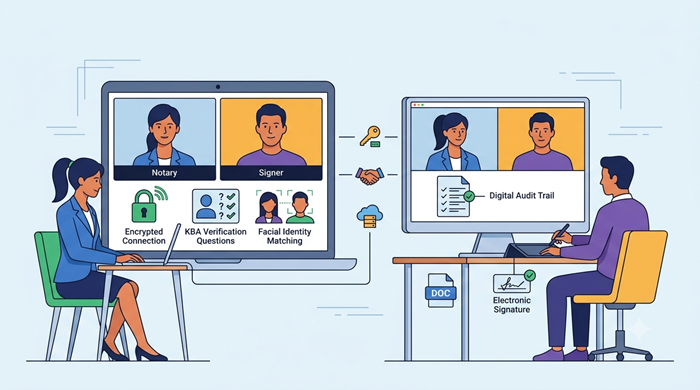
A typical online notarization may involve several steps before the notary completes the act. These can include reviewing identity information, examining an identification document, answering authentication questions, completing facial or liveness checks, participating in a live video session, and creating an electronic record.
The purpose of these safeguards is to make impersonation more difficult and provide evidence of what occurred during the appointment.
NIST’s Digital Identity Guidelines explain that remote identity verification presents unique security challenges and requires appropriate controls for identity proofing and authentication.
How KBA Helps Prevent Identity Fraud
KBA stands for knowledge-based authentication. It uses questions based on information associated with an individual’s identity to provide another layer of verification.
During a remote notarization appointment, a signer may be asked questions that are intended to distinguish the legitimate individual from someone attempting to impersonate them.
KBA can be useful, but it should not be viewed as a complete identity solution on its own. Personal information can sometimes be obtained through public records, data breaches, social engineering, or other sources.
NIST’s identity guidance recognizes these limitations and emphasizes stronger identity-proofing methods rather than relying exclusively on knowledge-based information.
That is why reputable RON workflows typically combine KBA with other verification methods.
Why ID Verification Is Important
ID verification provides another important layer of protection.
Rather than relying only on information a signer knows, the process can involve a government-issued identification document. The system may analyze the document and compare information or photographs from the identification with the person participating in the online session.
This helps answer two separate questions:
Is the identification document legitimate?
Does the person presenting it correspond with that identity?
NIST’s identity-proofing guidance describes identity validation as a process that establishes the authenticity and accuracy of identity evidence. Remote identity verification may also incorporate liveness detection to help defend against presentation attacks.
The combination is important because a person attempting fraud may possess stolen personal information without actually being the legitimate holder of the identity document.
KBA and ID Verification: What’s the Difference?
KBA and ID verification serve different purposes.
KBA tests information associated with the person’s identity. It can help determine whether the individual knows information that should reasonably be associated with them.
ID verification examines identity evidence, such as an acceptable government-issued identification document, and can involve checking whether the document appears authentic and whether it corresponds with the person participating in the session.
Using multiple verification layers makes the process more difficult to manipulate than relying on a single authentication method.
No individual security measure is perfect. The goal is to combine multiple controls so that defeating one layer does not automatically defeat the entire process.
What Happens During a Secure Remote Signing Session?
1. The Signer Starts the Appointment
The signer accesses the approved online notarization platform and provides the information required to begin the identity-verification process.
The platform may collect basic identity details before allowing the signer to proceed.
2. The Identification Document Is Checked
The signer presents an acceptable identification document according to the applicable requirements.
Technology may examine information on the document and identify potential inconsistencies or signs of manipulation.
3. Identity Authentication Takes Place
The signer may complete KBA questions, document authentication, facial comparison, liveness detection, or other approved identity checks.
The exact process depends on the platform, applicable law, and circumstances of the notarization.
4. The Notary Conducts the Session
The notary communicates with the signer through secure audio-video technology.
The notary confirms the necessary information, observes the signer, reviews the document as appropriate, and completes the notarial act according to applicable requirements.
5. Electronic Records Are Created
A properly conducted remote notarization can generate electronic records documenting the appointment.
Depending on applicable law, the records may include an electronic journal entry and an audio-video recording of the session.
These records can provide valuable evidence about the identity verification process and what took place during the notarization.
Can Remote Online Notarization Be Hacked?
No digital service can honestly guarantee zero security risk. Remote notarization, like any online process involving sensitive information, requires appropriate technical and procedural safeguards.
The important question is whether the platform and process are designed to reduce realistic risks.
A reputable RON provider should use appropriate protections for communications, identity information, documents, account access, and stored records. Strong authentication and controlled access can also reduce opportunities for unauthorized users to interfere with a session.
Signers have responsibilities as well. Using a trusted device, protecting account credentials, avoiding suspicious links, and accessing the legitimate notarization platform can reduce common security risks.
Why the Notary Still Matters
Technology is an important part of RON, but the notary remains central to the process.
A notary is responsible for performing the notarial act according to applicable legal requirements. The professional must follow the procedures required for the particular jurisdiction and transaction.
That human oversight provides an important layer that technology alone cannot replace.
During a remote appointment, the notary can communicate directly with the signer, observe the signing process, identify potential concerns, and ensure that required procedures are followed.
Is RON Legal in the USA?
RON is legal in many parts of the United States, but the specific requirements vary by state.
State laws can determine who may perform remote notarizations, which technologies may be used, how identity verification must occur, what records must be maintained, and which documents qualify for online notarization.
The Revised Uniform Law on Notarial Acts includes provisions addressing remote notarization through audio-video communication and identity-related procedures, while individual states establish their own rules and requirements.
For a practical explanation, read is RON legal in the USA.
Understanding the applicable state requirements is especially important when a document involves real estate, financial transactions, estate planning, business matters, or other legally significant activities.
Remote Online Notarization vs. In-Person Notarization
Traditional notarization requires the signer to appear physically before the notary. The notary can inspect the identification document in person and observe the signing directly.
RON changes the setting rather than eliminating the verification process. The signer and notary interact through secure audio-video technology while identity verification and other safeguards are completed remotely.
The biggest practical difference is convenience. A remote appointment can eliminate travel and make notarization more accessible for people who cannot easily visit a traditional office.
For a closer comparison, see in-person vs. RON in Miami.
The appropriate option depends on the document, legal requirements, personal circumstances, and availability of authorized remote notarization.
What Is Remote Online Notarization?
At its simplest, remote online notarization allows a qualified notary to perform a notarial act using approved electronic technology while the signer participates remotely.
The process generally combines identity verification, electronic documents, secure communication, electronic signatures, and digital records.
However, RON is more than simply signing a PDF during a video call. A compliant process involves specific requirements designed to establish the signer’s identity and document the notarial act.
Those safeguards are what distinguish a properly conducted remote notarization from an ordinary online document-signing service.
For a straightforward introduction, see what is remote online notarization.
Why Choose a Professional Signing Agent in South Florida?
The technology behind RON is only part of the experience. Professional guidance can make the appointment easier and help ensure that required steps are completed correctly.
Lissy is a professional and legal signing agent in South Florida who helps clients navigate signing appointments with careful attention to identity verification, documents, and applicable procedures.
For clients looking for reliable remote online notarization services, working with an experienced signing professional can provide greater clarity throughout the process.
Professional assistance can be particularly valuable when documents are time-sensitive or involve important financial, legal, real estate, or business decisions.
How to Choose a Secure RON Provider
Not every online notarization service provides the same experience or security controls. Before scheduling an appointment, consider several factors.
Look for Strong Identity Verification
A reputable platform should explain how it verifies the identity of participants. Multiple verification layers generally provide stronger protection than a single authentication method.
Check Security and Privacy Practices
Look for clear information about how personal information, identification documents, signatures, and recordings are protected.
Understand Recordkeeping
Ask whether the process creates the records required by applicable law and how those records are handled.
Confirm Legal Compliance
The provider and notary should follow the rules applicable to the jurisdiction and type of notarization.
Work With a Qualified Professional
A knowledgeable signing agent can help identify procedural issues before they become problems and make the appointment easier to navigate.
Final Thoughts
Remote online notarization offers convenience without necessarily sacrificing security. Its effectiveness comes from combining several safeguards rather than relying on a single technology.
KBA can provide an additional identity check. ID verification can help establish the authenticity of identity evidence. Liveness and facial checks can provide another defense against impersonation, while secure communication and electronic records add further accountability.
Most importantly, technology works alongside the notary rather than replacing professional oversight.
For anyone considering online notarization, the best approach is to use a legitimate platform, work with a qualified professional, and confirm that the process meets the requirements applicable to the document and jurisdiction.
Frequently Asked Questions
Is remote online notarization secure?
Yes. A properly conducted RON appointment can use multiple identity, authentication, communication, and recordkeeping safeguards to reduce fraud risk.
Is KBA enough to verify someone’s identity?
No. KBA is generally stronger when combined with identity-document verification and other appropriate authentication measures.
What does ID verification do?
ID verification helps determine whether an identification document is authentic and whether it corresponds with the person participating in the notarization.
Does RON create an electronic record?
Many RON processes maintain electronic journal records and audio-video recordings when required by applicable law.
Can every document be notarized remotely?
No. Eligibility depends on applicable state law, document type, transaction requirements, and specific legal exceptions.
